The Ford 1910 Tractor Wiring Diagram is an invaluable resource for anyone seeking to understand the electrical system of this vintage tractor. This comprehensive guide provides a detailed overview of the wiring layout, ensuring that you can troubleshoot and repair any issues that may arise with your Ford 1910 tractor. As you delve into the intricacies of the wiring diagram, you will discover the importance of precise connections and the potential consequences of incorrect wiring.
With the Ford 1910 Tractor Wiring Diagram, you will gain a deeper understanding of the electrical system and be equipped to tackle any electrical issue that may arise. This detailed guide is a must-have for any tractor enthusiast or mechanic looking to maintain or repair their Ford 1910 tractor. By following the wiring diagram, you will be able to identify and fix electrical problems, ensuring that your tractor runs smoothly and efficiently. Whether you are a seasoned mechanic or a novice DIYer, this guide is an essential tool for anyone working with vintage tractors.
what is the history of ford tractors
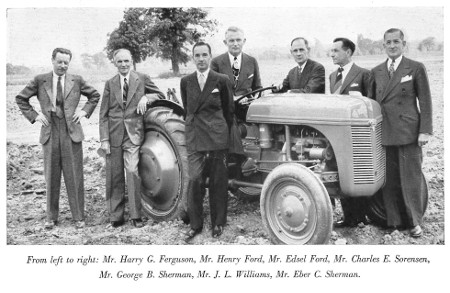 The history of Ford tractors dates back to the early 20th century, with the company’s first tractor, the Fordson, being introduced in 1917. The Fordson was a groundbreaking model that pioneered the mass production of gasoline-powered tractors, making them more accessible and affordable for farmers worldwide. This innovation led to significant growth in the tractor industry and cemented Ford’s position as a major player in the market.
In the following years, Ford continued to innovate and expand its tractor offerings. The company introduced the Fordson Model F in 1917, which became a huge success in North America and Europe. The Model F was followed by other models, including the Fordson Super Dexta and the Fordson Super Major, which were imported and sold in America as the Ford 2000 Diesel and the Ford 5000, respectively.
The 1930s saw significant advancements in tractor design, particularly with the introduction of the Ford N-series tractors. This line of tractors, which included the 9N, 2N, and 8N models, featured the innovative three-point hitch system developed by Harry Ferguson. The 8N model, released in 1947, became one of the most popular farm tractors of all time, with over 530,000 units sold worldwide.
Ford continued to evolve its tractor offerings throughout the 20th century, introducing new models and technologies. In 1964, the company consolidated its European Fordson brand and US Ford brand into a global tractor line, which included models like the 2000 series, the 4000 line, and the 6000, featuring powerful six-cylinder engines.
In the 1970s and 1980s, Ford continued to innovate, introducing the world’s first twin-rotor combine in 1975 and the NH2, a hydrogen-powered tractor, in 2009. The company also acquired New Holland in 1985, creating the Ford-New Holland line, which was later sold to Fiat in 1990.
Throughout its history, Ford has been committed to producing durable and reliable tractors that have become iconic in the agricultural industry. The company’s legacy continues to be celebrated by tractor enthusiasts and farmers alike, who appreciate the significant impact Ford has had on the development of modern farming practices.
what were the most popular ford tractor models
 The most popular Ford tractor models include the Ford 8N, Ford 9N, and Ford 2N, which were part of the N-series line produced from 1939 to 1952. The Ford 8N, in particular, is often referred to as the most popular farm tractor of all time in North America, with over 530,000 units sold worldwide.
what were the differences between ford n-series and fordson tractors
The Ford N-series and Fordson tractors were both produced by Ford, but they were distinct models with different features and characteristics. The Fordson tractors were produced from 1917 to 1928, while the Ford N-series tractors were produced from 1939 to 1952.
The main differences between the Fordson and Ford N-series tractors were:
Design and Technology: The Fordson tractors were the first genuine Ford tractors, introduced in 1917. They were designed with a more primitive technology compared to the Ford N-series, which featured more advanced designs and innovations like the three-point hitch system developed by Harry Ferguson.
Power and Transmission: The Fordson tractors had less powerful engines and simpler transmissions compared to the Ford N-series. The Ford N-series, particularly the 8N model, was known for its increased power and improved transmission, which made it more efficient and versatile.
Production Period: The Fordson tractors were produced from 1917 to 1928, while the Ford N-series tractors were produced from 1939 to 1952. This means that the Ford N-series was a more modern and advanced line of tractors compared to the Fordson.
Global Reach: The Ford N-series tractors were more widely distributed globally, with over 530,000 units sold worldwide. The Fordson tractors, although successful in their time, did not achieve the same level of global popularity.
Successor: The Ford N-series tractors were replaced by the Ford NAA tractor in 1953, which marked the end of the N-series production. The Fordson tractors, on the other hand, were discontinued in 1928 and were not directly replaced by another Fordson model.
These differences highlight the evolution of Ford’s tractor designs and technologies over time, with the Ford N-series representing a significant improvement over the earlier Fordson models.
. wiring schematic for Dummies There are many various techniques to take a look at repairing an electrical issue but We’ll persist with the simplest way. 1st , discover the issue space on the wiring diagram. Spotlight the individual circuit applying a different shade for good and adverse. Trace the wiring until you may see the place a brief can have taken spot. Get rid of Each and every percentage of the diagram in sections right until you find the brief while in the wiring. This will make knowing the place to examine connections easy using an automotive wiring diagram. The wire gauges are revealed over the facet from the Device so you already know which slot to implement for stripping insulation.

Ford 1910 Tractor Wiring Diagram
. This circuit allows for the bottom outlet to generally be switched even though the very best outlet will continue to be scorching all the time. To accomplish this circuit with energy coming into one of the receptacles, you need to utilize a 4-wire cable from receptacle to receptacle which permits the extra circuit. 3-wire cable in to the swap box. JYeltonJYelton 29k3333 gold badges128128 silver badges239239 bronze badges $endgroup$ one three $egingroup$ When you see why we want schematics as apposed to other sorts of diagrams, see also electronics.
Ford 1910 Tractor Wiring Diagram
All over again, don’t fail to remember the venting. Make sure it’s a fantastic semi-rigid metal vent behind it, can’t be that slinky tinfoil things, and usually Check out the surface. Examine it while in the spring, Verify it proper ahead of the snowfalls. Animals love to get in Those people locations to help keep heat for the winter and afterwards They only depart their households when it turns into summertime exterior, Which’s what’s gonna plug up your venting. It detects possible incorrect wiring situations in common 110-a hundred twenty five VAC outlets Gives six probable wiring situations that happen to be speedy and simple to read for supreme performance Lights suggest if wiring is appropriate and indicator light-weight chart is incorporated Exams regular 3-wire retailers UL Shown Light signifies if wiring is incorrect Extremely handy and convenient to use. The diagram listed here exhibits how a simple 4-wire thermostat is linked as indicated by the color code chart under. The fundamental Heat + A/C Procedure thermostat normally utilizes only 5 terminals.
#Unlocking #Ford39s #Tractor #Secrets #Wiring #Diagrams #Revealed