
Key Takeaways
- AI applications for agency workflows work best when they solve specific, repeatable problems rather than attempting to replace human creativity
- Successful implementations focus on three core areas: data processing, task automation, and intelligent routing
- The most effective AI tools integrate seamlessly with existing tech stacks rather than requiring complete workflow overhauls
- Performance measurement and continuous optimization are critical for maintaining AI system effectiveness
- Budget allocation for AI tools should prioritize measurable ROI over trendy features
The digital marketing industry has reached an inflection point where AI applications built specifically for agency workflows have moved from experimental curiosities to mission-critical infrastructure. After nearly two decades of watching marketing technology promises come and go, I can confidently say that we’re finally seeing AI tools that actually deliver on their automation promises.
The difference between what works and what doesn’t comes down to one fundamental principle: successful AI applications solve specific workflow problems rather than attempting to replace human expertise entirely. The agencies thriving with AI automation aren’t the ones chasing every shiny new tool, but those methodically implementing solutions that amplify their existing capabilities.
The Current State of AI-Powered Agency Workflows
Most agencies are drowning in manual tasks that eat into their strategic thinking time. Campaign setup, data analysis, client reporting, and lead qualification consume hours that could be spent on creative strategy and relationship building. The agencies that have successfully implemented AI workflows have identified three core areas where automation delivers consistent results:
- Data Processing and Analysis: Transforming raw campaign data into actionable insights
- Task Automation: Eliminating repetitive manual processes
- Intelligent Routing: Moving leads, tasks, and information to the right people at the right time
The platforms that consistently deliver results in these areas include Make.com for complex workflow automation, custom GPTs for content and analysis tasks, and specialized no-code AI agents for client-facing interactions.
What Actually Works: Proven AI Applications for Agencies
Automated Brief Generation and Campaign Planning
One of the most successful implementations I’ve seen involves automated brief generation that transforms client intake forms into comprehensive campaign strategies. Using Make.com, agencies can create workflows that:
- Pull client responses from intake forms
- Cross-reference industry benchmarks and competitor data
- Generate preliminary campaign structures with budget allocations
- Route completed briefs to appropriate team members
The key to making this work is structuring your intake process to capture the right data points. Instead of open-ended questions, use specific fields that AI can process: target audience demographics, budget ranges, campaign objectives with predefined options, and success metrics with numerical targets.
A mid-sized agency I consulted with reduced their campaign planning time by 60% using this approach. Their workflow triggers whenever a new client completes their intake form, automatically generating a preliminary strategy document that their strategists can refine rather than build from scratch.
Intelligent Lead Scoring and CRM Automation
Lead scoring has evolved beyond simple point systems into sophisticated AI-driven qualification engines. The most effective implementations combine behavioral data, demographic information, and engagement patterns to create dynamic scoring models that improve over time.
Here’s a practical framework that works:
- Data Collection: Track website behavior, email engagement, social media interactions, and content consumption
- Scoring Algorithm: Weight activities based on conversion probability (demo requests = 50 points, pricing page views = 30 points, blog reads = 5 points)
- Automated Routing: High-scoring leads go directly to senior account managers, medium scores enter nurture sequences, low scores receive educational content
- CRM Integration: Automatically update lead records and trigger appropriate follow-up sequences
The agencies getting this right are seeing 40-50% improvements in lead-to-client conversion rates because their sales teams focus on qualified prospects rather than chasing every inquiry.
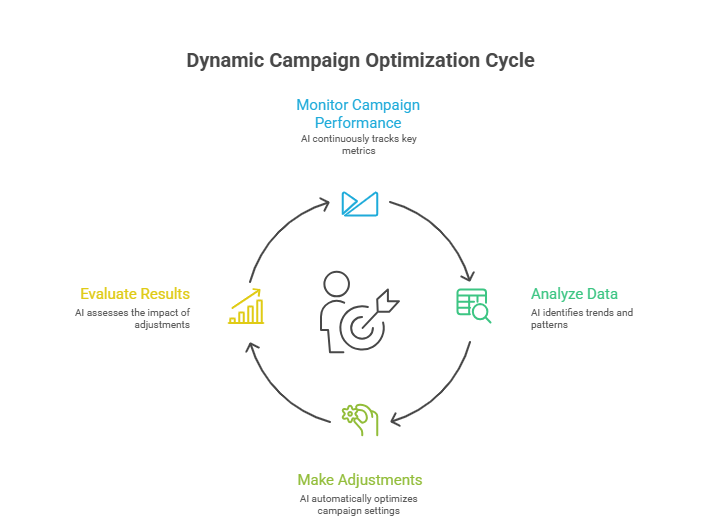
Dynamic Campaign Optimization
Real-time campaign optimization represents one of the most sophisticated applications of AI in agency workflows. Rather than waiting for weekly performance reviews, successful agencies have built systems that continuously monitor campaign performance and make automatic adjustments.
A working example involves Google Ads campaigns where AI monitors:
- Cost per acquisition trends across ad groups
- Keyword performance relative to historical baselines
- Audience segment engagement rates
- Time-of-day and day-of-week performance patterns
When performance drops below predetermined thresholds, the system automatically pauses underperforming elements, increases budgets for high-performing segments, and alerts account managers to investigate significant changes.
Client Reporting and Communication Automation
Monthly reporting consumes enormous amounts of agency time, but AI-powered reporting systems have revolutionized this process. The most effective implementations go beyond simple data visualization to provide contextual analysis and strategic recommendations.
Your reporting automation should include:
- Data Integration: Pull metrics from Google Analytics, social platforms, advertising accounts, and CRM systems
- Performance Analysis: Compare current performance to previous periods and industry benchmarks
- Insight Generation: Identify trends, anomalies, and opportunities using AI analysis
- Recommendation Engine: Suggest specific optimizations based on performance data
- Automated Distribution: Deliver customized reports to different stakeholders
What Doesn’t Work: Common AI Implementation Failures
Over-Automation of Creative Processes
The biggest mistake agencies make is attempting to automate creative strategy and content creation entirely. While AI can assist with ideation and provide frameworks, the nuanced understanding of brand voice, market positioning, and creative strategy still requires human expertise.
I’ve seen agencies waste months trying to build AI systems that generate campaign concepts or write compelling ad copy from scratch. These implementations consistently fail because they produce generic, templated output that lacks the strategic thinking and brand understanding that drives successful campaigns.
Complex Workflows Without Clear ROI
Many agencies get seduced by the technical possibilities of AI automation and build overly complex systems that consume more resources than they save. The most common failure pattern involves creating elaborate multi-step workflows that require constant maintenance and produce marginal improvements.
Before implementing any AI system, calculate the time investment required for setup and maintenance against the time savings you’ll achieve. If the ROI isn’t clearly positive within the first quarter, the implementation probably isn’t worth pursuing.
Insufficient Data Quality and Integration
AI applications are only as good as the data they process, and many agency implementations fail because of poor data quality or inadequate integration between systems. Disconnected data sources, inconsistent naming conventions, and incomplete datasets doom AI workflows before they begin.
Successful implementations require significant upfront investment in data cleaning, system integration, and process standardization. Agencies that skip this foundation work inevitably struggle with unreliable automation and inaccurate insights.
Building Effective AI Workflows: A Strategic Framework
Assessment and Planning Phase
Start by conducting a comprehensive audit of your current workflows to identify bottlenecks and inefficiencies. Focus on tasks that meet these criteria:
- High Volume: Performed frequently across multiple clients or campaigns
- Rule-Based: Follow consistent logic that can be codified
- Time-Intensive: Consume significant staff hours without adding strategic value
- Error-Prone: Susceptible to human mistakes that impact client results
Document these processes in detail, including inputs, outputs, decision points, and exception handling. This documentation becomes the blueprint for your AI implementation.
Technology Selection and Integration
Choose platforms that integrate well with your existing technology stack rather than requiring wholesale system replacements. Make.com excels at connecting disparate systems and creating complex multi-step workflows. Custom GPTs provide sophisticated analysis and content generation capabilities. No-code AI agents handle routine client interactions and data collection.
The key is selecting tools that complement rather than compete with your current systems. Your CRM, project management tools, and reporting platforms should enhance rather than hinder your AI implementations.
Implementation and Testing
Roll out AI workflows gradually, starting with low-risk applications that won’t impact client deliverables if they malfunction. Build comprehensive testing protocols that verify accuracy, reliability, and performance under various conditions.
Create fallback procedures for when AI systems fail or produce unexpected results. Your team needs clear protocols for identifying problems, reverting to manual processes, and maintaining client service quality during system issues.
Performance Monitoring and Optimization
Establish key performance indicators for each AI implementation and monitor them consistently. Track both efficiency metrics (time savings, error reduction) and quality metrics (client satisfaction, campaign performance impact).
Build feedback loops that allow your AI systems to improve over time. Regularly review performance data, identify improvement opportunities, and update workflows based on real-world usage patterns.
Platform-Specific Implementation Strategies
Make.com for Complex Workflow Automation
Make.com shines in scenarios requiring complex logic and multiple system integrations. The most successful implementations I’ve seen focus on:
- Lead Management: Routing leads between CRM, email platforms, and team members based on sophisticated criteria
- Campaign Setup: Automatically creating campaigns across multiple platforms using standardized templates
- Performance Monitoring: Collecting data from various sources and triggering alerts when metrics fall outside acceptable ranges
- Client Onboarding: Orchestrating multi-step processes that involve multiple team members and systems
The platform’s strength lies in its ability to handle complex conditional logic and error handling. Design your workflows with robust exception handling and clear failure modes to maintain reliability.
Custom GPTs for Analysis and Content
Custom GPTs work best when trained on specific agency processes and client contexts. Rather than using generic AI assistants, create specialized GPTs that understand your industry, methodology, and client requirements.
Effective applications include:
- Performance Analysis: Processing campaign data and identifying trends, opportunities, and issues
- Competitive Research: Analyzing competitor activities and market trends
- Strategy Development: Generating framework documents and strategic recommendations
- Quality Assurance: Reviewing campaign setups and content for errors and optimization opportunities
No-Code AI Agents for Client Interaction
No-code AI agents excel at routine client interactions that don’t require deep strategic thinking. The most effective implementations handle:
- Initial Client Inquiries: Qualifying prospects and scheduling consultations
- Campaign Updates: Providing performance summaries and answering routine questions
- Project Management: Coordinating deliverables and managing approval processes
- Data Collection: Gathering client feedback and project requirements
Measuring Success and ROI
Establish clear metrics before implementing AI workflows to measure their effectiveness accurately. Focus on both quantitative and qualitative measures:
| Metric Category | Key Indicators | Measurement Method |
|---|---|---|
| Efficiency | Time savings, task completion speed, resource utilization | Before/after time studies, productivity tracking |
| Quality | Error rates, client satisfaction, campaign performance | Quality audits, client feedback surveys, performance analysis |
| Financial | Cost savings, revenue impact, profitability improvement | Cost analysis, revenue attribution, profit margin tracking |
| Strategic | Team satisfaction, capacity for growth, competitive advantage | Team surveys, capacity analysis, market positioning assessment |
Review these metrics monthly and adjust your AI implementations based on performance trends. The most successful agencies treat AI workflow optimization as an ongoing process rather than a one-time implementation.
Future-Proofing Your AI Strategy
The AI landscape evolves rapidly, and today’s cutting-edge solutions may become obsolete within months. Build flexibility into your AI strategy by focusing on foundational capabilities rather than specific tools.
Invest in data quality, process documentation, and team training that will remain valuable regardless of which AI platforms you use. The agencies that thrive in the AI era will be those that develop sophisticated approaches to leveraging automation rather than those that simply adopt the latest tools.
Maintain a balanced perspective on AI’s role in your agency. These tools should amplify human creativity and strategic thinking, not replace them. The most successful implementations I’ve witnessed combine sophisticated automation with enhanced human expertise to deliver superior client results.
The future belongs to agencies that master the integration of AI capabilities with human insight, creating workflows that are both efficient and strategically sophisticated. The question isn’t whether to implement AI in your agency workflows, but how quickly you can build the systems that will define competitive advantage in the next decade.
Glossary of Terms
- AI Agents: Autonomous software programs that can perform tasks, make decisions, and interact with systems or users without direct human intervention
- API Integration: The process of connecting different software applications to share data and functionality through Application Programming Interfaces
- Campaign Attribution: The process of identifying which marketing touchpoints contribute to conversions and sales
- CRM Triggers: Automated actions that occur when specific conditions are met within a Customer Relationship Management system
- Custom GPTs: Specialized versions of GPT models trained or configured for specific tasks, industries, or use cases
- Dynamic Optimization: Real-time adjustment of campaign parameters based on performance data and predefined rules
- Lead Scoring: A methodology for ranking prospects based on their likelihood to become customers using predetermined criteria
- No-Code Platforms: Development environments that allow users to create applications and workflows without traditional programming knowledge
- Workflow Automation: The use of technology to perform tasks and processes with minimal human intervention
- ROI (Return on Investment): A performance measure used to evaluate the efficiency and profitability of an investment
Further Reading
www.growth-rocket.com (Article Sourced Website)
#Applications #Built #Agency #Workflows #Works #Doesnt #Growth #Rocket