When the Jeju Air Flight 2216 crashed into a concrete wall in the Muan International Airport on 29 December 2024, it killed everyone on board except two survivors. It sent shockwaves across the country, adding further woes to a stressful year for many Koreans, already dealing with the martial law attempt of the impeached president-to-be Yoon Suk Yeol.
For a country that so often draws inspiration and hope from its football team, this distressing backdrop has only placed a greater responsibility on their shoulders. Unfortunately, South Korean fans are finding little reprieve in football spheres either. Albeit trivial in comparison to the tragedies mentioned, South Korean football seems to be sliding toward its own form of disaster of mismanagement. This is even more shocking considering South Korea are currently topping Group B in their 2026 FIFA World Cup qualification campaign.
How did they reach this point?
Roar editor Christy Doran made the trip to Seattle with VisitSeattle.org, diving into the city’s electric sports vibe, outdoor adventures, and renowned food scene. Click here for his latest adventure in the Emerald City.
On August 2023, JoongAng Ilbo, one of South Korea’s leading newspapers, published a report that shocked the country. This report revealed that 80 per cent of Korean football officials admitted that Japan had surpassed, or were surpassing, South Korea. For a country where football has been central to the identity from the time of the colonial occupation by none other than Japan, it was a humiliation to the core. Then another report by Paul Williams in 2024 exposed the extent of chaebol meddling in football structure, something already mentioned in Nikolas Sonneborn’s work “Organizational Culture, Image & Identity in Professional South Korean Club Football – A Case Study on K-League and K-League Clubs with Different Ownership Models” a year earlier.
These reports all blamed South Korea’s clear lack of vision for a long-term football strategy. This lack of strategy is pretty much deeply rooted. Although a powerful force in Asian football since independence, South Korea only established a professional league, the K-League, in 1983, albeit after president and military dictator Chun Doo-hwan urged all chaebols to invest in it. This has, however, enabled a very risky and unsustainable program, where clubs have become tools for various business conglomerates to seize control without realistic commitments to the game.
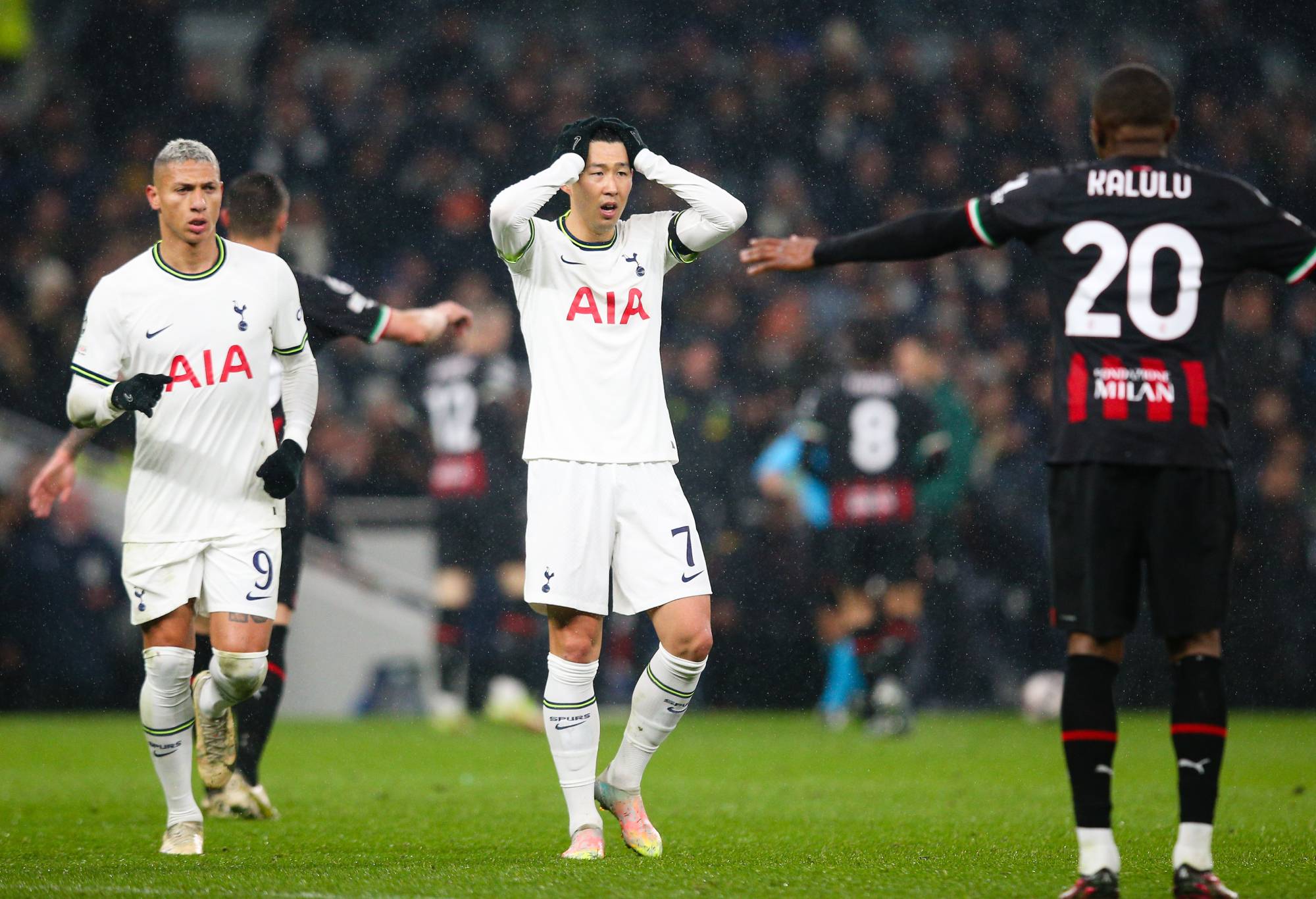
South Korean star Heung-Min Son playing for Tottenham Hotspur. (Photo by Craig Mercer/MB Media/Getty Images)
There are two types of clubs being run in South Korea. The first is conglomerate teams. They are clubs run by various chaebols, empowered by them to grow, but also at their complete mercy. An example is the case of Jeonbuk Hyundai Motors, a powerhouse of Asian club football. This team’s name speaks for itself: it is financed by the Hyundai conglomerate, the second most powerful chaebol in the country. In this model, it’s the company that has the final say, not the club; if the club is no longer useful, the boss will be happy to depose.
The second is the community teams. They are clubs run by commoners, mostly fans and genuine supporters, and owned by local municipalities. These clubs don’t have large and gigantic budgets like those empowered by chaebols. Because of this lack of financial muscle, if they can’t be transferred to a conglomerate to finance, they have to either move or dissolve. An example is Gwangju FC, a symbol of rare community team success. The team is controlled by Gwangju Municipality and has been storming the current AFC Champions League Elite season, but their lifespan depends on how long the Municipality can feed them.
Then comes the management of the Korean Football Association (KFA). While long admired as one of the most efficient in Asia, KFA is currently under the control of Hyundai since 1993, under Chung Mong-joon. The current president is Chung Mong-joon’s cousin, Chung Mong-gyu, establishing dynastic control of the association. Under Chung Mong-joon, South Korea experienced a rapid transition to prominence in Asian football; yet the country’s controversial fourth-place finish at the 2002 FIFA World Cup became a stain in the memories of many football fans, who believed Chung bribed the officials to achieve the result.
Under his cousin Chung Mong-gyu, President of KFA since 2013, further controversies followed, with the loss of the Paju National Training Centre, inadequate funding, and accusations of corruption, such as when he attempted to pardon 100 people related to a major match-fixing scandal in 2011, or the appointment of Jürgen Klinsmann as coach despite widespread objection. Yet no one seemed able to challenge his authority due to his background, complicating attempts to reform. When KFA is turned into a fiefdom of Hyundai, South Korean football is persistently devoid of any strategic planning, leaving players and managers to overwork in order to fix the federation’s own shortcomings.
It’s not a secret why JoongAng Ilbo’s report in 2023 exposed the shocking reality of South Korea languishing behind Japan in terms of development. The report also shed light on South Korea’s largely outdated player management system, which relied exclusively on physical stamina, individual performances and less about skills – a stark contrast to Japan’s diversified and balanced development that enabled their rise. Furthermore, South Korean football focused heavily on trying to win at all costs with very little emphasis on tactical and strategic set-up; unlike Japan’s calculated approach, balancing both the profits of youth and senior teams.
In the end, though, it’s the lack of a long-term plan that undermined South Korea: because of chaebol meddling, South Korea have failed to provide a proper plan to achieve long-term growth, whereas Japan’s 100-year vision is helping them to maximise their potential.
A new era of the UEFA Champions League is here, only on Stan Sport.
Such matters have clearly been reflected in South Korea and Japan’s performances at the FIFA World Cup in recent years (excluding the jointly-hosted 2002 edition). Not so far away, during the 2022 FIFA World Cup in Qatar, both nations progressed beyond the group stages in vastly different ways. Japan topped the group in style, even beating Germany and Spain to decide their own fate. South Korea, meanwhile, barely made it through to the last 16, relying on Ghana’s valiant effort to tie down Uruguay so the Taegeuk Warriors could advance by goals scored.
It is remarkable that South Korea are still on the path to the 2026 FIFA World Cup, and are still undefeated. Yet, beneath the impressive results, cracks are becoming apparent. Last year, South Korea suffered two consecutive heartbreaks. First, the senior team lost to Jordan in the semi-finals of the 2023 AFC Asian Cup, thus extending South Korea’s Asian Cup hurt for more than six decades since they last took the crown. Second, the U23s team were shockingly eliminated by Indonesia in the last eight, having played with only ten men for 120 minutes, ending their streak of Olympic participation since 1988. The U17s team almost became the third after a poor performance at the U17s Asian Cup qualifiers against China, the opponents historically favourable for many Koreans regardless of age level. In this match, South Korea only qualified after a late penalty sealed a 2-2 draw.
It seems like Koreans are living exclusively off the success of individual stars like Lee Kang-in, Kim Min-jae, Hwang Hee-chan and the most famous of all, Son Heung-min. With a football institution largely unable to make decisive reforms, these individuals remain the only hope for many despondent Korean fans. Koreans know exactly who is responsible for ruining football in their nation, but they look powerless to stand against them. With that, the demise, while hard to see, is continuing to eat them from within.
www.theroar.com.au (Article Sourced Website)
#Dont #WCQ #success #fool #South #Korean #football #dying